




When the power suddenly becomes unstable, many people immediately think of a blackout. However, another common electrical problem—a brownout—can be just as dangerous, and in some cases, even more harmful to your home appliances.
Understanding the difference between brownout vs blackout is essential for protecting expensive household devices such as refrigerators, air conditioners, washing machines, televisions, and water pumps.
In this guide, we'll explain what each power event means, how they affect your appliances, and why installing a voltage protector is one of the smartest investments for your home.
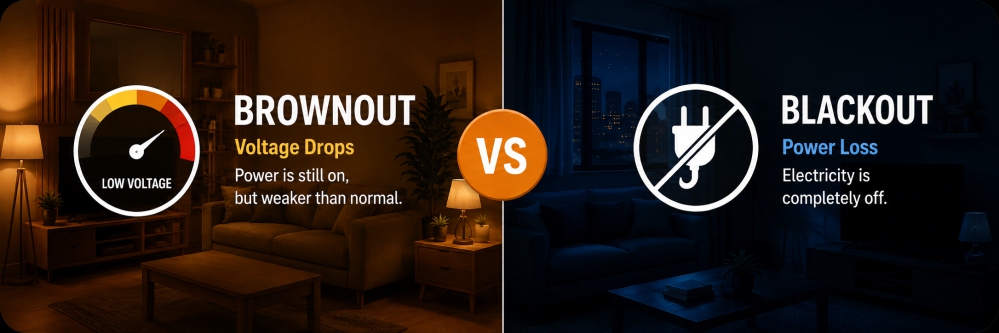
What Is a Brownout?
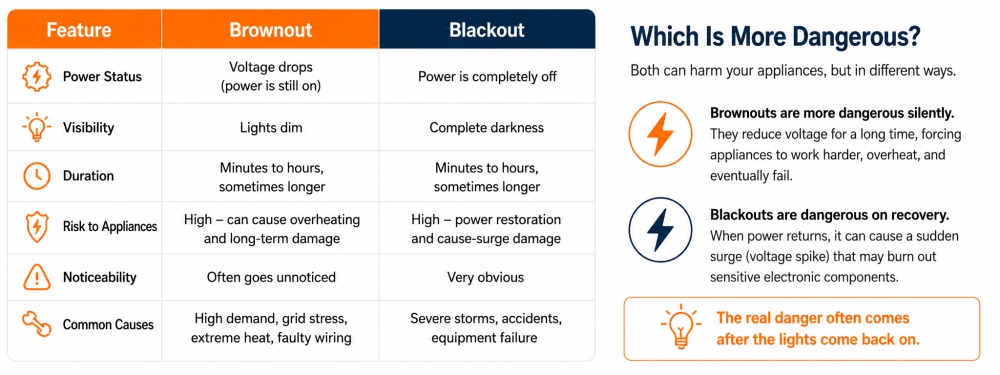
A brownout is a temporary drop in voltage while electricity continues to flow.
Unlike a blackout, your lights may remain on during a brownout, but they often appear dimmer. Electrical appliances continue operating, although they may not receive enough voltage to function correctly.
Brownouts can occur because of:
- High electricity demand during hot summer months
- Overloaded power grids
- Long-distance power transmission
- Utility maintenance
- Faults in local distribution systems
Since electricity is still available, many homeowners don't realize a brownout is happening until their appliances begin to perform poorly.
Common Signs of a Brownout
- Lights become noticeably dim
- Air conditioners cool less effectively
- Refrigerator compressor struggles to start
- Fans rotate more slowly
- Electronic devices randomly restart
Although a brownout may seem harmless, prolonged low voltage can gradually damage motors and electronic components.
What Is a Blackout?
A blackout is a complete loss of electrical power.
During a blackout:
- All lights turn off
- Home appliances stop operating
- Internet routers lose power
- Air conditioners shut down
- Refrigerators stop cooling
Blackouts are usually caused by:
- Severe storms
- Lightning strikes
- Grid failures
- Fallen power lines
- Equipment failures
- Scheduled utility maintenance
While a blackout itself usually doesn't damage appliances, the moment electricity returns can create dangerous power surges and voltage spikes.
Can Brownouts Damage a Refrigerator?
Absolutely.
A refrigerator compressor requires adequate voltage to start and maintain normal operation.
During a brownout:
- The compressor may repeatedly attempt to start.
- Electrical current increases.
- Internal winding temperatures rise.
- Compressor life is significantly reduced.
Modern refrigerators also contain electronic control boards that are highly sensitive to unstable voltage.
Replacing a damaged compressor or control board can be far more expensive than installing a refrigerator voltage protector.
Can Brownouts Damage Air Conditioners?
Yes.
Air conditioners are among the most vulnerable appliances during voltage fluctuations.
Low voltage can cause:
- Compressor overheating
- Reduced cooling efficiency
- Higher electricity consumption
- Premature compressor failure
Because compressors are expensive to replace, many HVAC professionals recommend installing a voltage protector for air conditioners, especially in areas where brownouts are common.
Can Blackouts Damage Appliances?
A blackout itself generally does not damage electrical equipment.
The real danger occurs when power is restored.
As electricity returns, voltage may fluctuate rapidly before stabilizing.
This can create:
- Power surges
- Voltage spikes
- Inrush current
- Sudden compressor restart
Sensitive electronic devices such as televisions, routers, refrigerators, and computers are especially vulnerable during this period.
How to Protect Appliances from Brownouts and Blackouts
Fortunately, protecting your home is simple.
1. Install a Voltage Protector
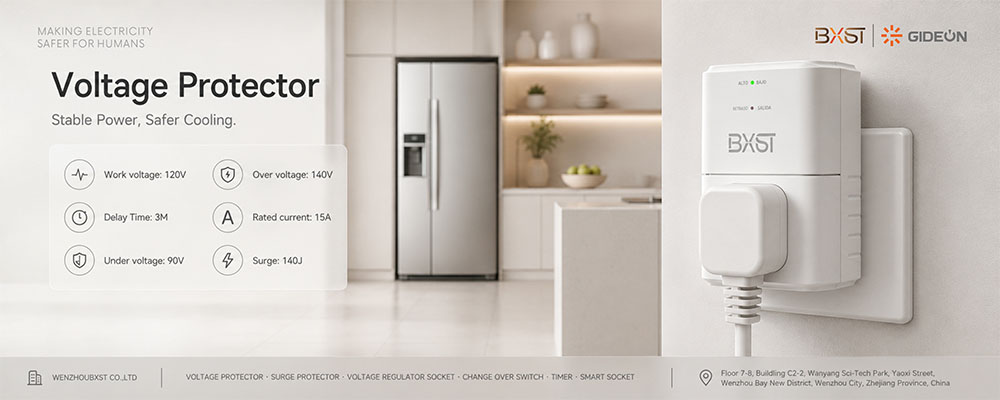
A voltage protector continuously monitors incoming voltage.
If voltage becomes too high or too low, it automatically disconnects power to prevent appliance damage.
Once voltage returns to a safe range, power is restored automatically.
This is one of the most effective ways to protect:
- Refrigerators
- Air conditioners
- Washing machines
- Water pumps
- TVs
- Freezers
2. Use Surge Protection
A surge protector helps absorb sudden voltage spikes caused by:
- Lightning
- Utility switching
- Grid failures
- Power restoration
Combining surge protection with voltage protection provides more comprehensive electrical safety.
3. Choose Devices with Automatic Delay Restart
Many modern voltage protectors include an automatic delay function.
Instead of reconnecting power immediately after a blackout, the device waits for the voltage to stabilize before allowing electricity to reach your appliance.
This feature is particularly important for compressors found in refrigerators and air conditioners.
Why a Voltage Protector Is Better Than Waiting for Damage
Many homeowners only realize they need protection after an expensive repair.
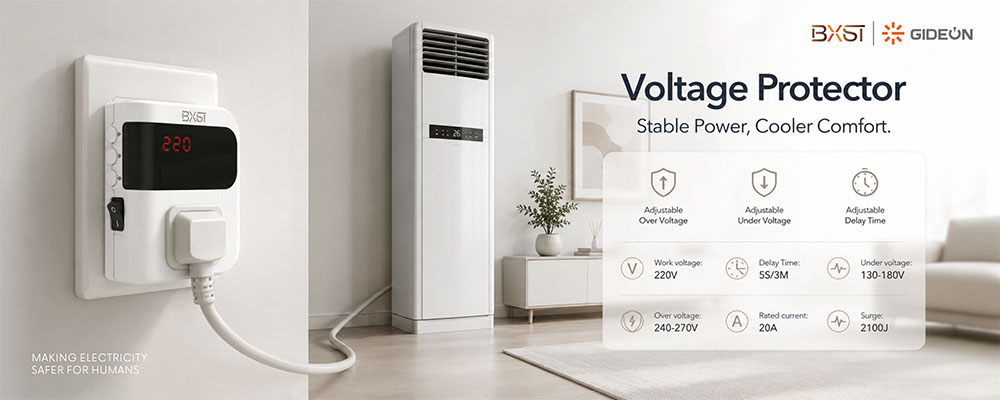
A quality voltage protector offers:
- Protection against brownouts
- Protection against blackouts
- Over-voltage protection
- Under-voltage protection
- Automatic delay restart
- Longer appliance lifespan
- Reduced maintenance costs
- Greater electrical safety
Compared with replacing a refrigerator compressor or air conditioner control board, installing a voltage protector is a cost-effective preventive solution.
Frequently Asked Questions
Is a brownout worse than a blackout?
For many appliances, yes. Brownouts can silently damage motors and compressors because equipment continues operating under low-voltage conditions.
Can a brownout damage electronics?
Yes. Computers, televisions, routers, and appliances with electronic control boards can all be affected by unstable voltage.
Should I unplug appliances during a blackout?
If possible, unplug sensitive electronics during extended blackouts to reduce the risk of damage when electricity returns.
Can a voltage protector prevent brownout damage?
Yes. A voltage protector disconnects power whenever voltage falls below a safe operating range, helping prevent overheating and premature appliance failure.
Protect Your Appliances with BXST Voltage Protectors
Whether your home experiences frequent brownouts, unexpected blackouts, or unstable voltage fluctuations, protecting your appliances before damage occurs is always the smarter choice.
BXST specializes in manufacturing reliable voltage protectors designed to safeguard refrigerators, air conditioners, washing machines, water pumps, televisions, and other household appliances from electrical abnormalities.
With advanced protection technology, automatic voltage monitoring, and fast response times, BXST helps homeowners and distributors worldwide reduce equipment failures and improve electrical safety.
Protect your appliances. Extend their lifespan. Choose BXST for dependable voltage protection.


